
What Actually Happens at a Football Transfer Medical

The fee is agreed, the wages are settled, the private jet has landed — and now the entire deal rests on what a club doctor finds over the next six hours. The transfer medical is football's final exam: a process most fans imagine as a quick run on a treadmill, but which in reality is an exhaustive audit of a human body that a club is about to insure for tens of millions.
What the doctors actually examine
A modern medical begins with the file: every injury, surgery and scan from the player's career, requested from previous clubs and cross-checked against the player's own account. Then comes the physical battery. Cardiac screening — echocardiogram and stress test — heads the list, a non-negotiable since the game's repeated brushes with heart-related tragedy. Musculoskeletal assessment follows: joints, ligaments, old fractures, the knees and ankles that carry the whole investment.
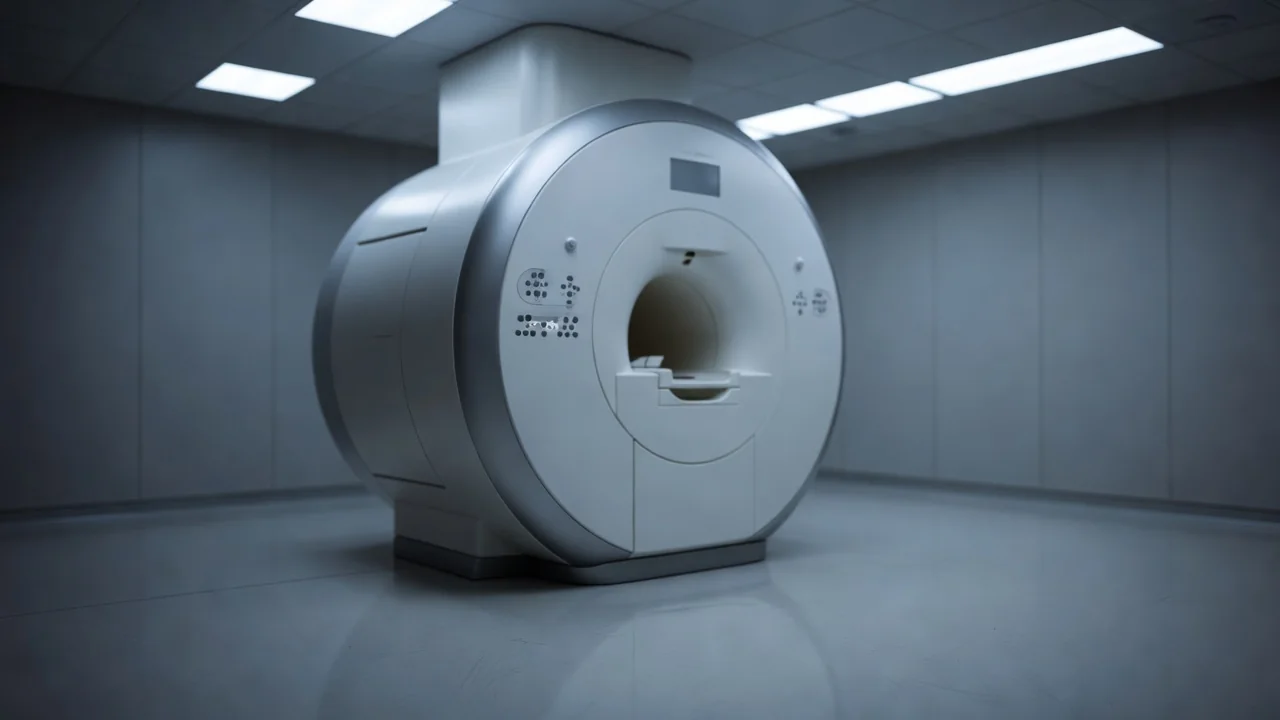
Imaging does the deep work. MRI scans of problem areas hunt for the things that do not hurt yet: cartilage wear, stress reactions in bone, the early degeneration that turns a dream signing into a long-term patient. Blood panels, body composition, isokinetic strength testing and movement screening complete the day. At elite clubs the process runs five to eight hours across one or two days.
Pass, flag, fail: the three outcomes
Almost nobody "fails" a medical outright in the way fans imagine. The real spectrum runs from clean pass, through conditional pass, to a flag serious enough to renegotiate. The middle category is where the interesting business happens. A scan showing manageable knee wear does not kill the deal — it changes it. The fee drops, the contract shortens, or clauses appear tying wages to appearances.
Insurance drives much of this. A club committing major money needs the player to be insurable, and insurers read medical reports with actuarial coldness. An uninsurable injury history can make a deal impossible regardless of how willing both clubs remain.
| Finding level | Typical example | Likely outcome |
|---|---|---|
| Clean | No significant history, clear scans | Deal proceeds as agreed |
| Minor flag | Old, fully healed injuries | Proceeds, noted in file |
| Moderate flag | Cartilage wear, recurring muscle issues | Renegotiation: fee, length or clauses |
| Serious flag | Unhealed damage, degenerative conditions | Deal restructured heavily or cancelled |
| Critical | Cardiac or career-threatening findings | Deal off, player referred for care |
Where medicals fit in the deal timeline
Timing is tactical. Most medicals happen after agreement in principle but before contracts are signed, because the medical is the last legitimate exit ramp. On deadline day the sequence compresses brutally — medicals in airport hotels, club doctors flying to the player, results phoned through with the window closing. Every collapse blamed on "paperwork" in the final hours deserves a second look; sometimes the paperwork is a scan.
There is also a quieter function. The medical gives the buying club's coaching and fitness staff their first full dataset on the new signing: what to manage, what to strengthen, how many minutes his knees can honestly carry in April. The report outlives the transfer itself.

The examinations that entered transfer folklore
The medical's power is written in the deals it stopped. In 2000, Ruud van Nistelrooy's move to Manchester United collapsed at the examination table when doctors flagged his knee; days later he ruptured the cruciate ligament in training, vindicating the caution in the harshest way possible — and United still signed him a year later, after the surgery, for a then-British record. In 2014, Loïc Rémy's agreed move to Liverpool dissolved after his medical, with the club never detailing the concern and the striker returning to London. Both cases taught the market the same lesson: the scan is the one voice in a transfer that cannot be negotiated with.
What fans should watch for
- A medical announced and then silence for 24 hours usually means a flag is being assessed, not a problem with logistics.
- Sudden talk of a "restructured deal" after the medical stage points at conditional findings.
- Loan-with-obligation structures sometimes appear when a club wants protection against a body it does not fully trust.
Public examples are rare because clubs guard medical confidentiality, but the known cases are vivid. Nabil Fekir's 2018 move to Liverpool collapsed after the medical flagged his knee history — and the deal had reached the stage of squad-number photographs. The buying club does not always walk away: sometimes the flag converts a straight fee into a restructured deal with appearance-based add-ons, shifting the risk back onto the pitch.
The medical is the one stage of a transfer where nobody is selling anything. That is exactly why it matters — and why the smart reader treats "medical scheduled" as near-certain, but never as done.
Keep reading

Deadline Day 2027: How the Last 24 Hours Actually Work
The last 24 hours run on certificates, not vibes: who files what, which clock actually expires, and why a deal announced after midnight was registered before it.
2026-10-17
What 'Here We Go' Really Means in a Transfer
The catchphrase that turned one journalist into the sport’s ticker tape. What has to be true before it appears — and the rare cases it still falls through.
2026-08-30
The Final 72 Hours: From Agreement to Announcement
Agents fly, lawyers red-line, media teams book the unveiling video. The hidden production line between "agreed" and the smiling photo.
2026-08-17